Russia's Militaristic Budget: How Record Military Spending Impacts Security and the Economy
The Russian State Duma has adopted a federal budget for 2027–2029, projecting that military and security spending will reach record highs not seen since Soviet times, absorbing 44% of total expenditures.
 🧠AI Analysis
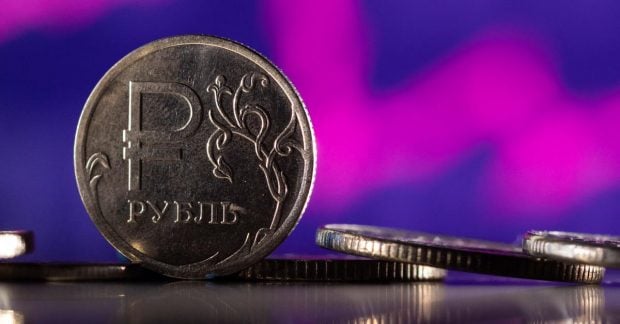
Photo: UNIAN
Key points
- Russian national defense spending to rise to 17.1 trillion rubles
- Security sector to absorb 44% of the total state budget
- Funding for social support and healthcare facing major cuts
- Russian government introduces new taxes and higher PIT rates
The State Duma of the Russian Federation has officially approved the federal budget law for 2027–2029, cementing the aggressor state's course toward total economic militarization. According to the new financial documents, the Russian government will allocate every third ruble from the state treasury to the military and weapons procurement, pushing these figures to historic highs unseen since the Soviet era. Overall expenditures under the "National Defense" category will increase by 32% to reach 17.1 trillion rubles.
Security Burden and Social Spending Cuts
In addition to military needs, funding for internal security agencies such as the Ministry of Internal Affairs, Rosgvardia, intelligence services, and the penitentiary system will rise significantly. Together with the Ministry of Defense, the security apparatus will consume 44% of the entire federal budget, totaling 21.3 trillion rubles. This massive reallocation of funds is being financed through steep cuts in social support, healthcare, housing and communal services, and national economic development.
Specifically, the federal project "Large Family" will lose 40% of its funding, while the national project "Long and Active Life" will see a 20% reduction. Experts note that Russia's civilian budget expenditures relative to the size of its economy will drop to their lowest levels since 2005, highlighting a severe structural imbalance in the aggressor's financial system.
New Taxes and Economic Outlook
To cover the budget deficit and fund military operations, the Russian government will introduce additional fiscal restrictions starting next year. These include an "excess profits tax" for gold miners and metal producers, an increase in the maximum personal income tax (PIT) rate on passive income and bank deposits to up to 22%, and a 22% VAT on purchases from foreign online stores.
Analysts point out that despite increased fiscal pressure, the budget remains in deficit, and the Russian economy is losing momentum due to inflationary pressures and the impact of industrial strikes. According to Vitaliy Shapran, a member of the Ukrainian Society of Financial Analysts, intensified strikes by Ukraine's Defense Forces on the enemy's vulnerable facilities could trigger a major economic crisis in Russia by 2027.
Source UNIAN — unian.ua/economics/finance/rosiya-zatverdila-rekordniy-viyskoviy-by… ↗
Read next
 👥Society
Zelensky presents Hungarian politician Magyar with 1942 archival newspapers from Mukachevo
During a meeting in Zakarpattia, Ukrainian President Volodymyr Zelensky presented Hungarian government head Magyar with historical documents mentioning his great-grandfat…
 🛡️Security
Court upholds detention of woman posing as paramedic during military facility blockade
The Kyiv Court of Appeal has denied an appeal from a woman accused of obstructing the National Guard during an incident in Petropavlivska Borshchahivka.
 🛡️Security
Russia threatens retaliation for refinery attacks despite claims of fuel market stability
Vladimir Putin has vowed retaliation for strikes on Russian oil refineries, while acknowledging complexities in the energy sector.
 💼Economy
How to optimize holiday spending: tips for residents of Svaliava before the New Year
Ahead of the winter holidays, experts recommend careful budget planning to avoid unnecessary spending on groceries, gifts, and decor.
 🏛️Politics
Debate on the accountability of anti-corruption bodies: Martyna Bohuslavets' position
Activist Martyna Bohuslavets stated that foreign business trips of NABU and SAPO heads are a valid reason for missing parliamentary commission meetings.
 🏛️Politics
Ombudsman Opens Proceedings Over Ignored Petition for Zelenskyy's Press Conference
The Human Rights Commissioner launched an investigation due to the lack of response to journalist Danylo Mokryk's petition regarding an open presidential press conference…